
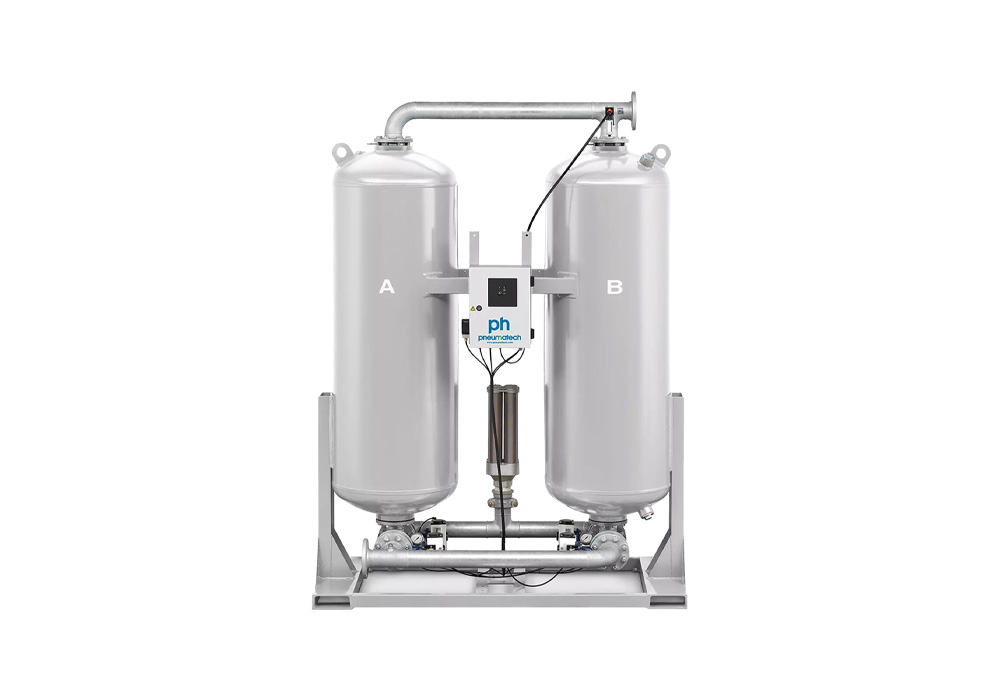
PH 760-3390 HE
Introduction
Key Benefits
Large Vessel Diameter
Three Controller Options
Transport-Friendly Design
Robust Welded Construction
Low Noise Purging
Only 16% Average Purge Rate
Why Choose pH 760–3390 He Adsorption Dryers?
Large industrial compressed-air systems often require continuous moisture control to protect pneumatic equipment, instrumentation, production processes and final products. Heatless adsorption dryers remove water vapour by passing compressed air through a desiccant and regenerating the saturated material with dry, expanded purge air.
The PH 760–3390 HE is designed specifically for high-flow applications. Its welded vessels, large diameter, open silencers and optimized regeneration system help provide dependable drying while keeping pressure drop and purge consumption under control.
Technical Specifications
Model |
Version PDP -40° C |
|---|---|
Nominal volume flow at dryer inlet (m3/h) |
|
PH 760 HE |
1296 |
PH 1020 HE |
1728 |
PH 1330 HE |
2268 |
PH 2060 HE |
3492 |
PH 2670 HE |
4536 |
PH 3390 HE |
5760 |
How Does the PH 760–3390 HE Work?
The PH 760–3390 HE uses a two-vessel heatless adsorption process to continuously produce dry compressed air.
Step 1 – Moist Compressed Air Entry
Compressed air containing water vapour enters the active adsorption vessel.
Step 2 – Desiccant Adsorption
The air passes through the desiccant, where moisture is captured.
Step 3 – Dry Air Delivery
The treated compressed air leaves the active vessel with the required low pressure dew point.
Step 4 – Desiccant Saturation
As the drying cycle continues, the active desiccant accumulates moisture.
Step 5 – Counter-Current Regeneration
A portion of dry, expanded purge air flows through the saturated vessel in the opposite direction to the normal drying airflow.
Step 6 – Moisture Release
The purge air removes the accumulated moisture from the desiccant.
Step 7 – Vessel Switching
The vessels automatically switch functions once regeneration is complete.
Step 8 – Continuous Drying
One vessel dries compressed air while the other regenerates, maintaining continuous dry-air production.
Why Choose PH 760–3390 HE?
-40°C Standard Pressure Dew Point
The standard configuration delivers a pressure dew point of -40°C / -40°F, suitable for demanding industrial compressed-air applications.
Optional -70°C Pressure Dew Point
For applications requiring exceptionally dry air, the range can be configured for -70°C / -94°F using molecular-sieve desiccant.
High Flow Capacity
With capacities up to 5,760 m³/h, the range is designed for large centralized compressed-air systems.
16% Purge Rate
The optimized design reduces average regeneration-air consumption to approximately 16% at maximum flow, helping lower the operating cost of heatless drying.
Open Silencer Design
Innovative open silencers help minimize pressure drop while reducing noise during purge cycles.
Counter-Current Regeneration
Regeneration against the direction of normal airflow supports efficient moisture removal and consistent dry-air production.
Application-Specific Desiccant
The standard -40°C version uses activated alumina, while molecular sieves are used for -70°C and high-inlet-temperature applications.
Large Vessel Diameter
The large vessels help reduce the risk of desiccant crushing. A sonic nozzle is available to further support desiccant protection.
Robust Welded Vessels
The welded-vessel construction provides a durable platform for large industrial installations.
Flexible Control Options
Customers can select from DC1, PureLogic™ or pneumatic control, depending on monitoring, energy-management and installation requirements.
Electricity-Free Pneumatic Control
The pneumatic controller option can operate without electricity at the dryer installation, making it suitable for specialized applications where electrical installation is undesirable or unavailable.
Features & Configuration Options
Drying Technology
- Heatless adsorption
- Two-vessel operation
- Counter-current regeneration
- -40°C standard PDP
- -70°C optional PDP
- Activated alumina for standard -40°C operation
- Molecular sieve for -70°C/high-temperature operation
Energy Management
- 16% average purge rate
- PDP control
- Compressor synchronization
- Optional purge-nozzle optimization
- Low pressure drop
Mechanical Construction
- Welded vessels
- Large vessel diameter
- Open silencers
- Sonic nozzle availability
- Robust industrial construction
- Transport-friendly design
Controller Options
- DC1 Controller – Basic control and monitoring
- PureLogic™ Controller – Advanced control, monitoring and energy optimization
- Pneumatic Controller – Electricity-free installation option
Available Options
- Purge-nozzle optimization
- PDP control for DC1 configuration
- Inlet and outlet filters
- Vessel safety valves
- Wooden packaging
- High-inlet-temperature configuration
Industrial Applications

Large Manufacturing Plants

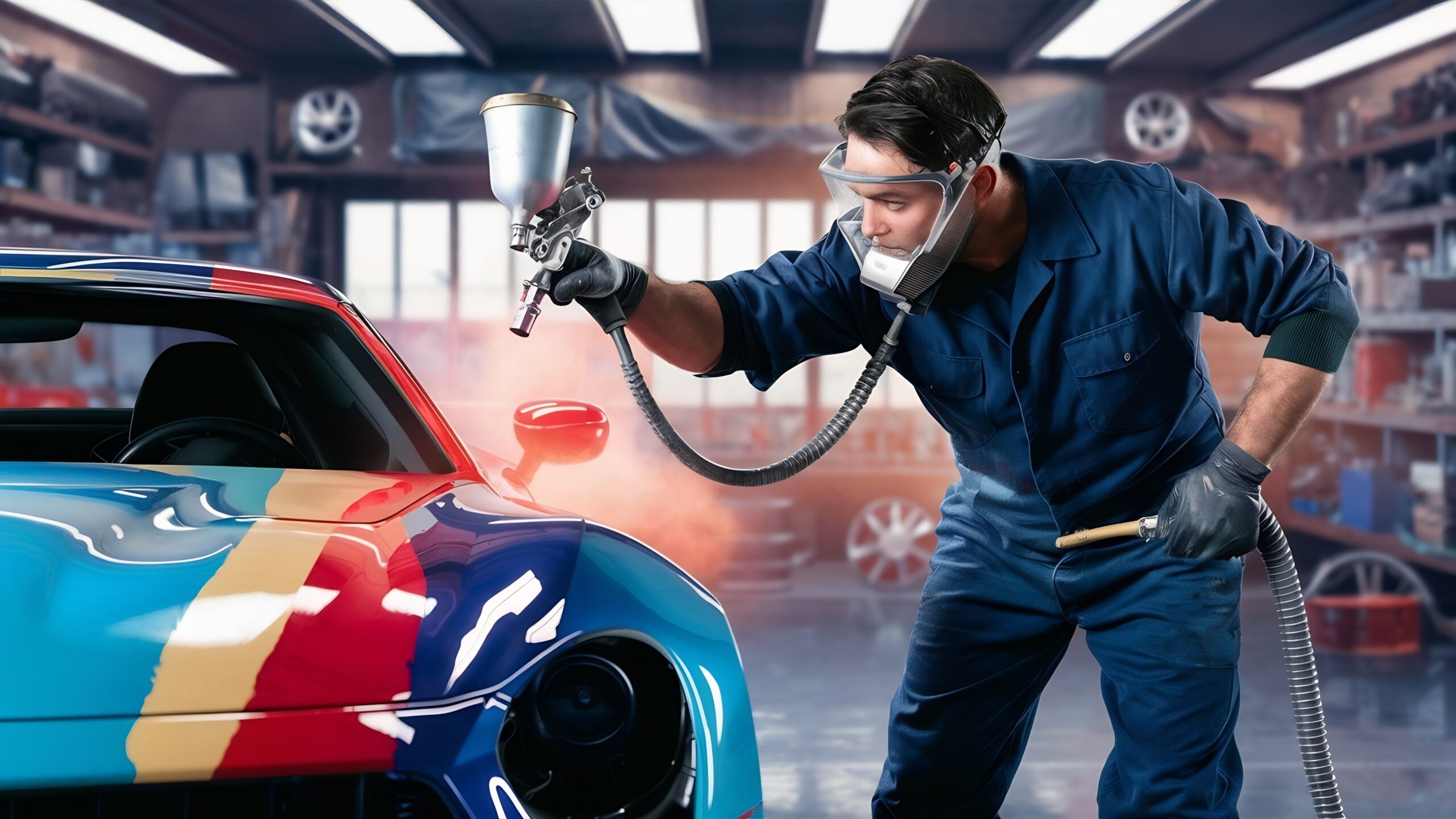
Automotive Manufacturing
Pharmaceutical Manufacturing

Chemical & Process Industries

Oil & Gas
Frequently Asked Questions
What is the PH 760–3390 HE?
What is the flow range?
What models are available?
What is the capacity of the PH 760 HE?
How should the correct PH model be selected?
Can Atcorp help select and supply the PH 760–3390 HE?
Related products
Oil-Injected, Rotary Screw Compressor
CPC Series 40-60 HP
Oil-Injected, Rotary Screw Compressor
CPE Series 150 HP
Oil-Injected, Rotary Screw Compressor
CPF Series 180-220 HP
Oil-Injected, Rotary Screw Compressor
CPF Series 270-340 HP
Oil-Injected, Rotary Screw Compressor