Atcorp

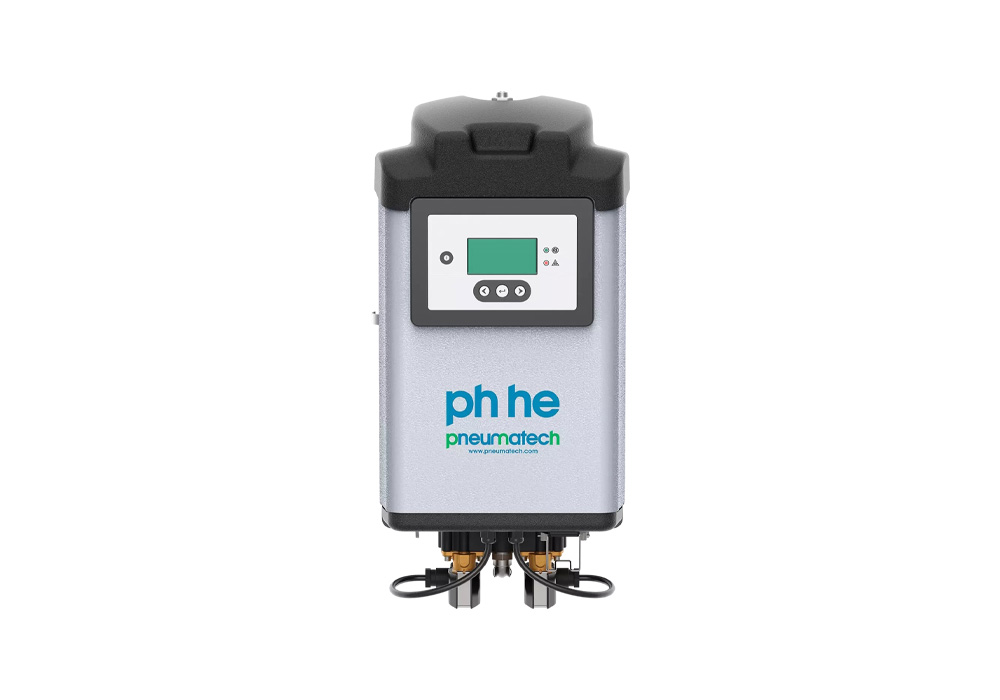
PH 4-11 HE

Compact heatless adsorption dryers designed to deliver very dry compressed air with pressure dew points down to -40°C or -70°C, making them suitable for applications requiring reliable moisture protection and space-efficient installation.

Introduction

Atcorp offers PH 4–11 HE heatless adsorption dryers for applications requiring compressed air that is significantly drier than standard refrigeration drying can provide. The compact extruded-profile design uses desiccant to remove moisture and can achieve pressure dew points of -40°C or -70°C, while easy cartridge replacement, optimized purge nozzles and standard wall-mounting brackets simplify operation and maintenance.

Key Benefits

Ultra-Dry Compressed Air
Compact Design
Low Maintenance
Stable Dew Point
Easy Desiccant Replacement
Optimized Purge Nozzle

Why Choose pH 4–11 He Adsorption Dryers?

Refrigeration dryers are suitable for many general compressed-air applications, but processes exposed to freezing temperatures, sensitive instrumentation or particularly demanding moisture requirements may require a much lower pressure dew point. Adsorption dryers address these applications by passing compressed air through a moisture-attracting desiccant.

Model

Nominal volume flow at dryer inlet (m3/h)

Version PDP -40°C

Version PDP -70°C

PH 4 HE

5.4

5

PH 7 HE

10.8

10

PH 11 HE

18

17

A heatless adsorption dryer uses a desiccant to capture water vapour from compressed air and periodically regenerates the saturated desiccant using a portion of dry compressed air.

Step 1 – Moist Compressed Air Entry
Compressed air containing water vapour enters the adsorption dryer.


Step 2 – Pre-Filtration
The C-grade pre-filter helps protect the adsorption system from upstream contaminants.


Step 3 – Adsorption
The compressed air passes through the desiccant, which attracts and retains moisture.


Step 4 – Dry Air Delivery
The treated compressed air exits the drying vessel with a very low pressure dew point.


Step 5 – Desiccant Saturation
Over time, the desiccant in the active vessel approaches its moisture-holding capacity.


Step 6 – Regeneration
A portion of already dried compressed air is used to regenerate the saturated desiccant without an external heater.


Step 7 – Vessel Switching
The drying and regeneration functions alternate between the vessels to provide continuous dry-air production.


Step 8 – Continuous Drying
The regenerated desiccant is returned to service for the next adsorption cycle.


Adsorption dryers work through the attraction of water vapour to a hygroscopic desiccant, while heatless systems use dry compressed air for regeneration.

Pressure Dew Point Down to -70°C

The PH 4–11 HE can achieve pressure dew points of -40°C or -70°C, providing much drier compressed air than standard refrigeration dryers.


Stable Moisture Control

Stable low pressure dew point performance helps reduce moisture-related risks such as corrosion, condensation and freezing in sensitive compressed-air systems.


Compact Extruded-Profile Design

The extruded-profile construction provides a compact solution for smaller compressed-air systems and installations where floor space is limited.


Easy Desiccant Cartridge Replacement

The straightforward cartridge replacement system makes desiccant maintenance faster and easier, reducing servicing time and potential downtime.


Optimized Purge Nozzle

Purge-nozzle optimization helps manage the regeneration airflow used during heatless operation and supports efficient dryer performance.


Flexible Wall-Mount Installation

Wall-mounting brackets are included, allowing the dryer to be installed in compact or customized layouts while preserving valuable floor space.


Integrated Filtration

The dryer is supplied with a C-grade pre-filter and an integrated dust filter to help protect the adsorption system and downstream air quality.


Optional PDP Control

Pressure dew point control is available as an option for applications requiring closer monitoring and control of dryer performance.

Drying Technology

  • Heatless adsorption operation
  • Dual-vessel adsorption principle
  • Desiccant-based moisture removal
  • -40°C pressure dew point option
  • -70°C pressure dew point option


Maintenance

  • Replaceable desiccant cartridges
  • Straightforward cartridge access
  • Low-maintenance design
  • No external regeneration heater


Filtration

  • C-grade pre-filter included
  • Integrated dust filter
  • Protection of desiccant from contaminants


Installation

  • Wall-mounting brackets included
  • Compact footprint
  • Flexible installation arrangement
  • Extruded-profile construction


Control & Monitoring

  • DC1 controller
  • Stable pressure dew point control
  • Optional PDP control

Industrial Applications

PH 4–11 HE adsorption dryers are suited to smaller compressed-air systems where conventional refrigeration drying is insufficient and a significantly lower pressure dew point is required.

Frequently Asked Questions

Find answers about PH 4–11 HE heatless adsorption dryers, pressure dew point, desiccant operation, capacity, installation, maintenance and applications.
The PH 4–11 HE is a compact heatless adsorption dryer designed to remove moisture from compressed air and achieve pressure dew points of -40°C or -70°C.
The range is available in two pressure-dew-point configurations: -40°C and -70°C.
The range includes PH 4 HE, PH 7 HE and PH 11 HE. Their nominal flow rates range from 5.4 to 18 m³/h, depending on the selected pressure-dew-point version.
Yes. It can be considered for Indian applications requiring very dry compressed air, provided the selected model operates within its specified pressure, inlet-temperature and ambient conditions.
Selection should consider required pressure dew point, actual compressed-air flow, operating pressure, inlet temperature, ambient conditions and the application’s moisture requirements.
Yes. Atcorp can help Indian customers evaluate their compressed-air quality requirements and select the appropriate PH 4 HE, PH 7 HE or PH 11 HE configuration based on airflow, pressure dew point and operating conditions.

Related products

Oil-Injected, Rotary Screw Compressor

CPC Series 40-60 HP

Oil-Injected, Rotary Screw Compressor

CPE Series 150 HP

Oil-Injected, Rotary Screw Compressor

CPF Series 180-220 HP

Oil-Injected, Rotary Screw Compressor

CPF Series 270-340 HP

Oil-Injected, Rotary Screw Compressor

CPI Series 15-30 HP