Atcorp

PH 22-43

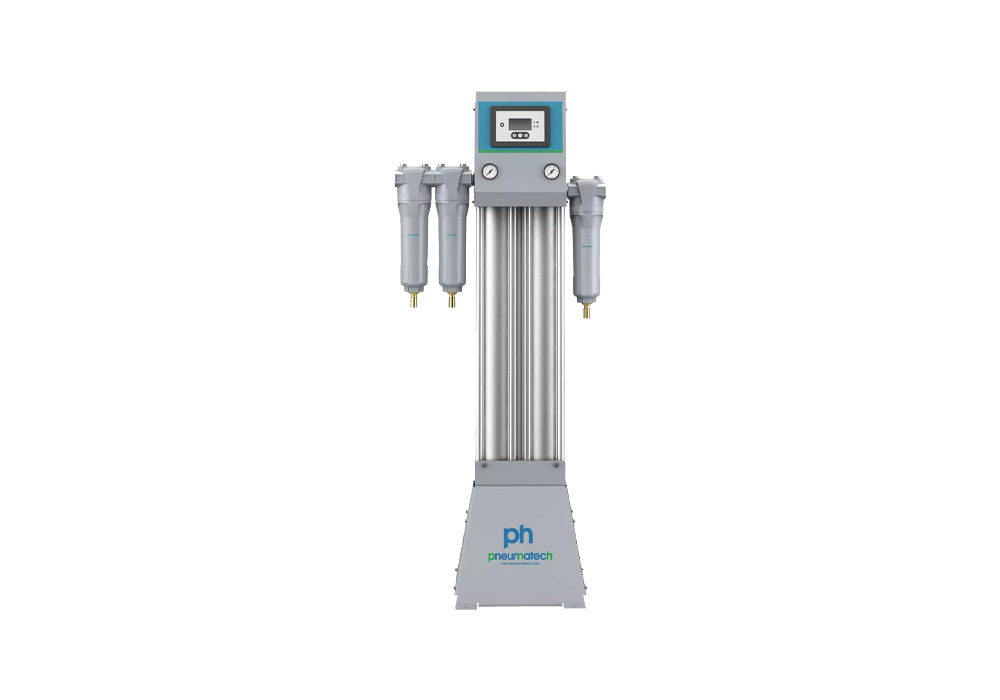
Compact heatless adsorption dryers for smaller compressed-air installations requiring clean, dry air. The PH 22–43 range offers -20°C and -40°C pressure dew points, efficient regeneration and simple operation in a compact extruded-profile design

Introduction

Atcorp offers PH 22–43 heatless adsorption dryers for smaller compressed-air systems where reliable moisture removal and clean, dry air are essential. The range combines optimized airflow, efficient regeneration, a DC1 controller and flexible installation options to deliver dependable drying with straightforward operation and maintenance.

Key Benefits

-20°C and -40°C Dew Points
Energy-Efficient Operation
Optional PDP Control
Compact Design
DC1 Controller
Three-Filter Protection

Why Choose pH 22–43 Adsorption Dryers?

Moisture in compressed air can lead to corrosion, condensation, pneumatic equipment problems and reduced process reliability. For smaller installations requiring air that is considerably drier than conventional refrigeration drying can provide, adsorption technology offers a practical solution.


The PH 22–43 uses desiccant to adsorb moisture from compressed air. Its two-tower design allows one tower to dry the air while the other is regenerated using dry, expanded purge air. Optimized airflow and regeneration help deliver reliable drying while keeping energy consumption under control.

Model

Version PDP -40°C

Nominal volume flow at dryer inlet (m3/h)

PH 22

34.9

PH 33

52.5

PH 43

72

Model

Version PDP -20°C

Nominal volume flow at dryer inlet (m3/h)

PH 17

28.8

PH 34

57.6

PH 49

82.8

The PH 22–43 uses a two-tower heatless adsorption process.


Step 1 – Moist Air Entry
Compressed air containing water vapour enters the active drying tower.


Step 2 – Adsorption
The air passes through the desiccant, which captures moisture from the compressed-air stream.


Step 3 – Dry Air Delivery
The treated air leaves the active tower with the required low pressure dew point.


Step 4 – Desiccant Saturation
The desiccant gradually accumulates moisture during the drying cycle.


Step 5 – Regeneration
The saturated tower is regenerated using a portion of dry, expanded compressed-air purge.


Step 6 – Moisture Removal
The purge air removes accumulated moisture from the desiccant.


Step 7 – Tower Switching
The drying and regeneration towers automatically switch roles.


Step 8 – Continuous Drying
One tower continues drying while the other regenerates, allowing continuous production of dry compressed air.

Two Pressure Dew-Point Options

The PH 22–43 is available for -20°C and -40°C pressure dew points, allowing the dryer to be matched to different moisture-control requirements.


Compact Extruded-Profile Design

The compact construction makes the range suitable for smaller compressed-air installations where floor space is limited.


Optimized Airflow

The internal airflow path is optimized to support efficient drying and reduce unnecessary energy consumption.


Optimized Purge Nozzle

Purge-nozzle optimization helps improve the regeneration cycle and supports efficient use of compressed air.


Stable Pressure Dew Point

The dryer is designed to provide consistent low pressure dew-point performance during normal operation.


Long-Life Desiccant

The high-quality desiccant is designed for a service life of up to 40,000 operating hours or five years, subject to operating conditions and maintenance.


Easy Desiccant Maintenance

Desiccant bags can be replaced without complicated servicing procedures, helping reduce maintenance time.


DC1 Controller

The DC1 controller provides intuitive, plug-and-play operation and helps maintain optimized dryer performance.


Optional PDP Control

A pressure dew-point sensor can be added to reduce purge-air use by initiating regeneration only when required, helping lower operating costs.


Flexible Installation

An optional wall-mounting kit provides additional installation flexibility for space-constrained locations.


Three-Stage Filtration

Two pre-filters—G and C grade—protect the dryer, while an S-grade dust filter helps maintain downstream air quality.

Drying Technology

  • Heatless adsorption
  • Two-tower operation
  • Dry compressed-air purge regeneration
  • -20°C PDP option
  • -40°C PDP option

Energy Management

  • Optimized airflow
  • Purge-nozzle optimization
  • Optional PDP control
  • Controlled regeneration cycle

Mechanical Construction

  • Extruded-profile design
  • Compact footprint
  • Easy desiccant bag replacement
  • Optional wall mounting

Filtration

  • G-grade pre-filter
  • C-grade pre-filter
  • S-grade dust filter

Control & Monitoring

  • DC1 controller
  • Stable dew-point management
  • Optional PDP monitoring
  • Plug-and-play operation

Available Options

  • PDP control
  • IP65 / NEMA 4 protection
  • Wall-mounting kit
  • Condensate collector

Industrial Applications

PH 22–43 adsorption dryers are particularly suited to smaller compressed-air systems where dependable moisture removal, compact installation and simple operation are important.

Frequently Asked Questions

Find answers about PH 22–43 heatless adsorption dryers, pressure dew point, capacity, regeneration, controls, maintenance and installation.
The PH 22–43 is a compact range of heatless adsorption dryers designed for smaller compressed-air installations requiring clean, dry compressed air.
The range provides -20°C / -4°F and -40°C / -40°F pressure-dew-point options.
The published nominal flow range is 28.8–82.8 m³/h, depending on the selected model and pressure-dew-point configuration.
Yes. It can be considered for smaller Indian industrial, workshop, automation and process-air systems requiring reliable low-dew-point compressed air, provided the selected model is correctly sized for actual operating conditions.
Selection should consider required pressure dew point, compressed-air flow, operating pressure, inlet temperature, ambient temperature, installation space and future capacity requirements.
Yes. Atcorp can help Indian customers assess their compressed-air drying requirements and select the appropriate PH 22–43 model based on airflow, pressure, dew point, operating conditions and installation requirements.

Related products

Oil-Injected, Rotary Screw Compressor

CPC Series 40-60 HP

Oil-Injected, Rotary Screw Compressor

CPE Series 150 HP

Oil-Injected, Rotary Screw Compressor

CPF Series 180-220 HP

Oil-Injected, Rotary Screw Compressor

CPF Series 270-340 HP

Oil-Injected, Rotary Screw Compressor

CPI Series 15-30 HP