
PH 12-64 HE
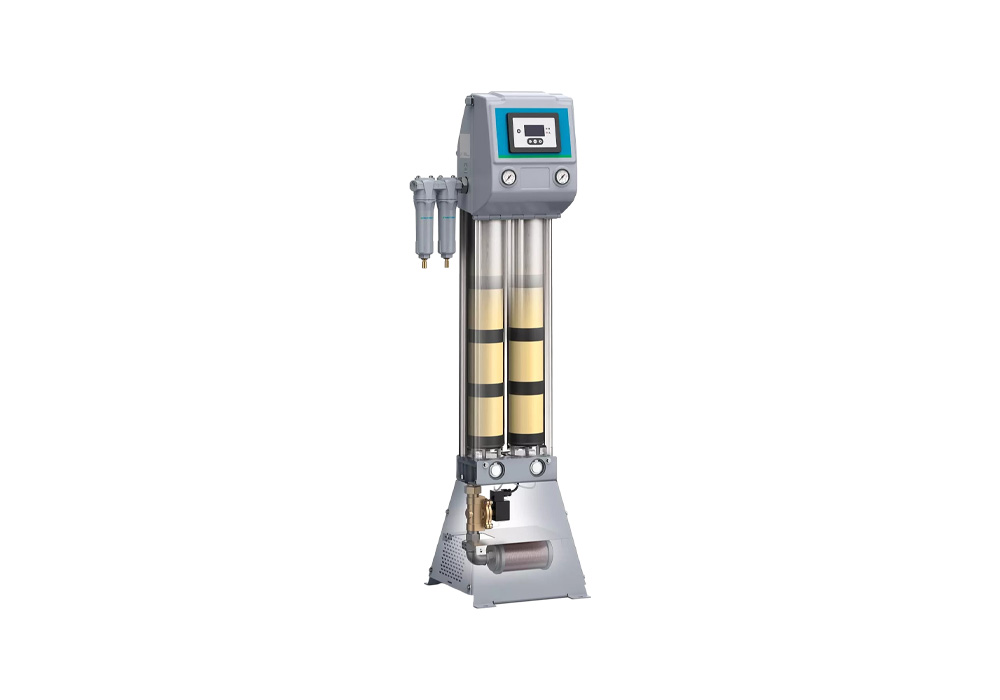
Introduction
Key Benefits
Very Low Pressure Dew Point
Dust-Free Desiccant Design
Dual Pre-Filtration
Structured Desiccant Technology
Stable Dew Point
Flexible Installation
Why Choose pH 12–64 He Adsorption Dryers?
Technical Specifications
Model |
Version PDP -40°C |
|---|---|
Nominal volume flow at dryer inlet (m3/h) |
|
PH 12 HE |
19.8 |
PH 22 HE |
36 |
PH 33 HE |
54 |
PH 43 HE |
72 |
PH 53 HE |
90 |
PH 64 HE |
108 |
Model |
Version PDP -20°C |
|---|---|
Nominal volume flow at dryer inlet (m3/h) |
|
PH 17 HE |
29 |
PH 34 HE |
58 |
PH 49 HE |
83 |
PH 64 HE |
108 |
PH 79 HE |
133 |
PH 94 HE |
158 |
Model |
Version PDP -70°C |
|---|---|
Nominal volume flow at dryer inlet (m3/h) |
|
PH 14 HE |
21.6 |
PH 21 HE |
32.4 |
PH 27 HE |
43.2 |
PH 33 HE |
54 |
PH 40 HE |
64.8 |
How Does the PH 12–64 HE Work?
The PH 12–64 HE uses adsorption to capture water vapour from compressed air and heatless regeneration to restore the drying capacity of the desiccant.
Step 1 – Moist Compressed Air Entry
Compressed air containing water vapour enters the dryer after upstream filtration.
Step 2 – Pre-Filtration
The G- and C-grade filters help protect the dryer and desiccant from contaminants.
Step 3 – Adsorption
Compressed air passes through the desiccant, which captures water vapour.
Step 4 – Dry Air Delivery
The treated air leaves the active drying vessel with a low pressure dew point.
Step 5 – Desiccant Saturation
As the active desiccant absorbs moisture, it gradually approaches its adsorption capacity.
Step 6 – Regeneration
A portion of dry compressed air is used to regenerate the saturated desiccant in the second vessel.
Step 7 – Vessel Switching
The drying and regeneration vessels alternate, allowing continuous production of dry compressed air.
Step 8 – Controlled Operation
The purge nozzle and controller help maintain stable dryer performance and optimize regeneration air use.
Why Choose PH 12–64 HE?
Structured Solides Desiccant
The structured Solides desiccant is designed to provide uniform airflow and efficient regeneration, helping improve overall dryer efficiency.
40% Longer Desiccant Life
The structured desiccant is designed for approximately 40% longer lifetime, helping reduce the frequency of desiccant maintenance and replacement.
Stable Low Pressure Dew Point
The optimized adsorption process and purge control help maintain stable low pressure dew-point performance.
Low Pressure Drop
The structured design promotes an even airflow path, helping reduce pressure losses through the dryer and supporting compressed-air system efficiency.
No Desiccant Dust
Unlike loose desiccant beads, the structured desiccant is designed to avoid desiccant dust build-up that can contribute to dryer failures and downstream contamination.
Efficient Regeneration
Optimized purge nozzles help control the amount of dry compressed air used for regeneration.
Easy Desiccant Maintenance
The structured desiccant configuration makes maintenance and replacement more straightforward.
Three Dew-Point Options
The range can be configured for -20°C, -40°C or -70°C pressure dew point, allowing the dryer to be matched to different application requirements.
Flexible Installation
An optional wall-mounting kit allows the dryer to be installed where floor space is limited.
Features & Configuration Options
Drying Technology
- Heatless adsorption
- Dual-vessel operating principle
- Structured Solides desiccant
- -20°C, -40°C and -70°C dew-point options
- Optimized regeneration
Filtration
- G-grade pre-filter
- C-grade pre-filter
- Two pre-filters supplied as standard
Control & Monitoring
- DC1 controller
- Optimized purge nozzle
- Optional pressure dew-point control
- Stable dew-point monitoring
Installation Options
- Extruded-profile construction
- Optional wall-mounting kit
- Optional IP65 / NEMA 4 protection
- Optional condensate collection
Electrical
- 115–230 VAC
- 50/60 Hz
The available options include PDP control, IP65/NEMA 4, wall mounting and condensate collection.
Industrial Applications

Pharmaceutical Manufacturing

Electronics Manufacturing

Food & Beverage Processing

Paint & Surface Finishing

Chemical & Process Industries
Frequently Asked Questions
What is the PH 12–64 HE?
What pressure dew points are available?
What is the flow range?
Is the PH 12–64 HE suitable for Indian industrial applications?
How should the right PH 12–64 HE model be selected?
Can Atcorp help select and supply the PH 12–64 HE?
Related products
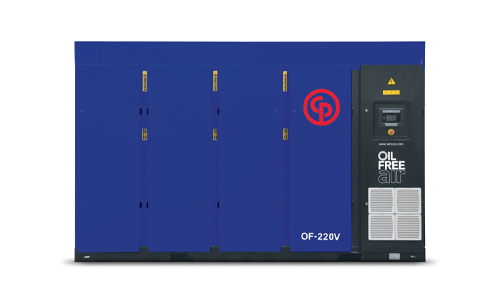
Oil-Injected, Rotary Screw Compressor
CPC Series 40-60 HP
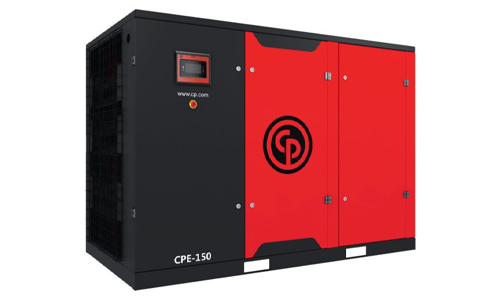
Oil-Injected, Rotary Screw Compressor
CPE Series 150 HP
Oil-Injected, Rotary Screw Compressor
CPF Series 180-220 HP
Oil-Injected, Rotary Screw Compressor
CPF Series 270-340 HP
Oil-Injected, Rotary Screw Compressor