
Dual Channel Chillers
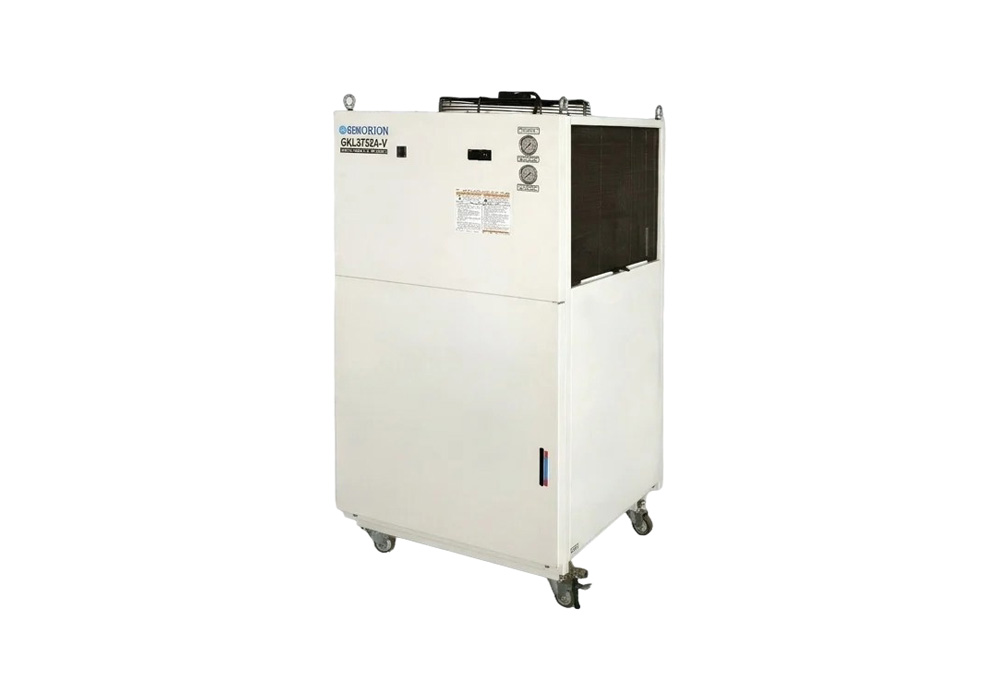
Introduction
Key Benefits
Two Independent Circuits
Laser Protection
Dual High-Pressure Pumps
Precise Temperature Control
Condensation Prevention
Wide Cooling Range
Why Choose Dual Channel Chillers?
Technical Specifications
| Specification | Details |
| Cooling Capacity Range | Approx. 1.5–55 kW |
| Cooling Circuits | 2 Independent Circuits |
| Primary Circuit | Laser Oscillator |
| Secondary Circuit | Optical System / Mirror Circuit |
| Oscillator Liquid Temperature | 10–30°C |
| Optical System Temperature | 25–40°C |
| Optical Temperature Difference | Typically ≥5°C above oscillator setting |
| Oscillator Control Precision | Up to ±1.0°C / ±0.5°C on applicable models |
| Optical Control Precision | ±1.0°C |
| Ambient Temperature | Approx. 5–45°C; up to 50°C on applicable models |
| Oscillator Evaporator | SUS316 Brazed Plate Heat Exchanger |
| Optical Evaporator | Stainless Steel Tube Heat Exchanger |
| Pumps | Independent Multistage Centrifugal Pumps |
| Water Tanks | Two Independent Tanks |
| Refrigerant | R410A / R407C depending on model |
| Compressor | Rotary / Scroll, model dependent |
| Condenser | Finned Tube, Forced Air Cooled |
| Control | Hot Gas Bypass / Inverter Control |
| Communication | RS485 Optional |
| Installation | Caster-Mounted |
How Does a Dual Channel Chiller Work?
A dual channel chiller uses two independent cooling circuits to provide separate temperature-controlled water streams for the laser oscillator and optical system.
Step 1 – Heat Generation
The laser oscillator and optical components generate heat during operation.
Step 2 – Independent Water Circulation
Two separate pumps circulate water through their respective cooling circuits.
Step 3 – Oscillator Cooling
The primary circuit removes heat from the laser oscillator and maintains its required temperature.
Step 4 – Optical Cooling
The secondary circuit independently cools the optical system at a different, typically higher, temperature.
Step 5 – Refrigeration
Each circuit transfers heat through its dedicated heat-exchange arrangement.
Step 6 – Temperature Control
The chiller continuously regulates both circuits to maintain their individual temperature set points.
Step 7 – Continuous Operation
The two circuits operate simultaneously without one circuit compromising the temperature requirements of the other.
This configuration is particularly valuable for laser cutting and welding systems where the oscillator and optics have different thermal requirements.
Why Choose Dual Channel Chillers?
Independent Temperature Control
Two isolated water circuits allow the oscillator and optical system to operate at different temperature set points.
Stable Laser Performance
Precise oscillator cooling helps maintain stable operating conditions and supports consistent laser performance.
Reduced Condensation Risk
The optical circuit can operate at a higher temperature than the oscillator circuit, helping reduce condensation on lenses and optical components.
Dual Pump Configuration
Independent multistage centrifugal pumps provide dedicated circulation for the two cooling circuits.
Separate Water Tanks
Two integrated SS304 water tanks maintain independent water circuits within the same chiller package.
Durable Heat Exchangers
The oscillator circuit uses SUS316 brazed plate heat exchangers, while the optical circuit uses stainless steel tube heat exchangers.
Wide Operating Range
The oscillator circuit supports approximately 10–30°C, while the optical circuit can operate around 25–40°C depending on configuration.
Easy Laser Machine Integration
Remote ON/OFF and potential-free status contacts allow the chiller to communicate with the main laser machine.
Features & Configuration Options
Core Features
- Two completely independent water circuits
- Independent oscillator and optical cooling
- Two integrated SS304 water tanks
- Two independent circulation pumps
- SUS316 brazed plate heat exchanger
- Stainless steel optical-system heat exchanger
- High-pressure pump configuration
- Built-in heaters for low-temperature environments
- Water-level indication for both circuits
- Air-cooled condenser
- Rotary or scroll compressor depending on model
- Hot-gas bypass / inverter control
- Remote ON/OFF
- Potential-free status contacts
- Dust-filter mesh
- Caster-mounted construction
- Powder-coated frame
Optional Features
- RS485 communication
- Inverter-driven fan motors
- Model-specific automation and monitoring
- Application-specific pump and flow configuration
Industrial Applications

Fiber Laser Cutting

Laser Welding

Sheet Metal Laser Cutting

Laser Processing

Wire EDM
Frequently Asked Questions
What is a dual channel chiller?
Why does a laser cutting machine need two cooling circuits?
How does the optical circuit help prevent condensation?
What temperature range does a dual channel chiller support?
What temperature-control accuracy can be achieved?
Can Atcorp help select a dual channel laser chiller?
Related products
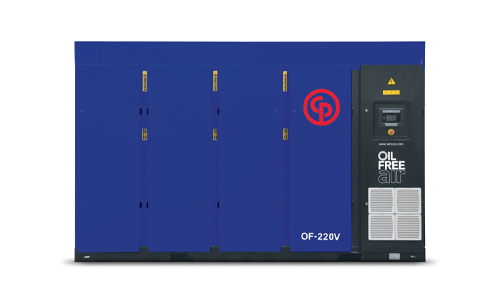
Oil-Injected, Rotary Screw Compressor
CPC Series 40-60 HP
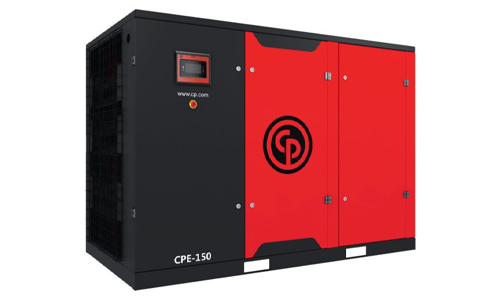
Oil-Injected, Rotary Screw Compressor
CPE Series 150 HP
Oil-Injected, Rotary Screw Compressor
CPF Series 180-220 HP
Oil-Injected, Rotary Screw Compressor
CPF Series 270-340 HP
Oil-Injected, Rotary Screw Compressor