Atcorp

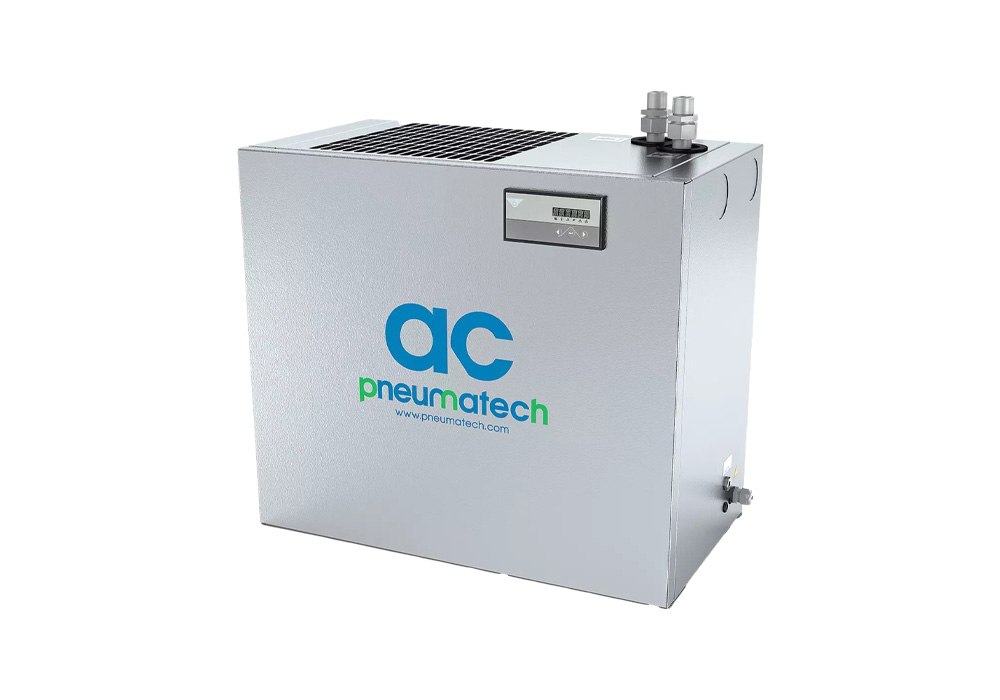
AC 15-100

Energy-efficient refrigerated air dryers designed to remove moisture from compressed air while adapting cooling operation to actual demand, helping deliver stable dry air with lower operating costs.

Introduction

Atcorp offers AC 15–200 cycling refrigeration dryers for applications that require reliable moisture removal from compressed air without unnecessary energy consumption. The range uses intelligent cycling control to adapt cooling operation to the actual load, maintaining a pressure dew point as low as 3°C while incorporating low pressure drop, zero-loss drains and simplified maintenance.

Key Benefits

Energy-Saving Operation
Up to 50% Energy Savings
High Inlet Temperature
Stable 3°C Dew Poin
Low Pressure Drop
Automatic Restart

Why Choose AC 15–200 Cycling Refrigeration Dryers?

Moisture in compressed air can cause corrosion, damage pneumatic equipment and affect finished-product quality. The AC 15–200 range uses refrigeration technology to condense and remove moisture while cycling its refrigeration system according to demand, providing reliable dry air without continuously running the cooling system at full capacity

Model

Nominal flow rate (m3/h)

16 bar

20 bar

AC 15

22

26

AC 20

36

52

AC 30

54

78

AC 40

72

99

AC 50

90

125

AC 65

108

157

AC 85

144

209

AC 100

180

261

A refrigeration dryer cools compressed air until moisture condenses and can be separated from the air stream.


Step 1 – Wet Compressed Air Entry
Warm, moisture-laden compressed air enters the dryer.


Step 2 – Air-to-Air Cooling
Incoming compressed air is pre-cooled through the air-to-air heat exchanger.


Step 3 – Refrigeration Cooling
The air then passes through the air-to-refrigerant heat exchanger, where its temperature is reduced further.


Step 4 – Moisture Condensation
As the air cools, water vapour condenses into liquid moisture.


Step 5 – Moisture Removal
The condensate is removed through the zero-loss drain.


Step 6 – Air Reheating
The dried compressed air is reheated through the air-to-air heat exchanger.


Step 7 – Dry Air Delivery
The outgoing air reaches a stable pressure dew point of approximately 3°C.


Step 8 – Energy-Saving Cycling
When cooling demand decreases, the refrigeration system cycles down or stops, reducing unnecessary energy consumption.

Energy-Efficient Cycling

The dryer adapts refrigeration operation to actual cooling demand instead of continuously running at full capacity.


Up to 50% Energy Savings

The energy-saving algorithm can significantly reduce power consumption during periods of reduced cooling demand.


Stable 3°C Pressure Dew Point

The range delivers a pressure dew point as low as 3°C, corresponding to ISO 8573-1:2010 Class 4 moisture performance.


Zero-Loss Condensate Drain

Condensed water is automatically discharged without unnecessarily releasing compressed air.


Low Pressure Drop

Efficient heat exchangers and optimized air passages help minimize pressure losses through the dryer.


Reliable High-Temperature Operation

The dryer accepts compressed-air inlet temperatures up to 60°C, supporting demanding industrial environments.


Automatic Restart

The system automatically restarts after a power failure, reducing the need for manual intervention.


Easy Maintenance

Top connections, long service intervals and accessible components simplify routine maintenance and installation.

Standard Features

  • Cycling refrigeration technology
  • Energy-saving control algorithm
  • Air-to-air heat exchanger
  • Air-to-refrigerant heat exchanger
  • Zero-loss condensate drain
  • Stable 3°C pressure dew point
  • Low pressure drop
  • Top-mounted pipe connections
  • Voltage-free remote alarm contact
  • Automatic restart after voltage failure
  • Easy access to key components
  • Long service intervals


Model / Configuration Options

  • 16-bar configuration
  • 20-bar configuration for AC 15–100
  • Air-cooled refrigeration configuration
  • R513A refrigerant for AC 15–100
  • R410A refrigerant for AC 125–200

Industrial Applications

AC 15–200 refrigeration dryers are suitable for general industrial compressed-air systems where moisture control, reliable operation and energy efficiency are important.

Frequently Asked Questions

Find answers about AC 15–200 cycling refrigeration dryers, pressure dew point, energy efficiency, moisture removal, installation and compressed-air applications.
A cycling refrigeration dryer removes moisture by cooling compressed air and condensing its water vapour. Unlike a continuously running dryer, its refrigeration system adjusts operation according to cooling demand, helping reduce energy consumption.
The AC 15–200 range provides a pressure dew point as low as 3°C / 37°F, corresponding to ISO 8573-1:2010 Class 4 moisture performance.
The range covers approximately 22–342 m³/h (13–201 cfm), depending on the model and operating pressure.
Yes. The AC 15–200 range provides a voltage-free contact for remote alarm and also supports automatic restart following voltage failure.
Yes. Refrigeration dryers are the most widely used compressed-air drying technology and are suitable for many applications where a +3°C pressure dew point is sufficient.
Yes. Atcorp can help Indian customers assess compressor capacity, actual air demand, operating pressure, inlet temperature, ambient conditions and required pressure dew point to identify the appropriate refrigeration dryer configuration.

Related products

Oil-Injected, Rotary Screw Compressor

CPC Series 40-60 HP

Oil-Injected, Rotary Screw Compressor

CPE Series 150 HP

Oil-Injected, Rotary Screw Compressor

CPF Series 180-220 HP

Oil-Injected, Rotary Screw Compressor

CPF Series 270-340 HP

Oil-Injected, Rotary Screw Compressor

CPI Series 15-30 HP