
PH 55–420 HE
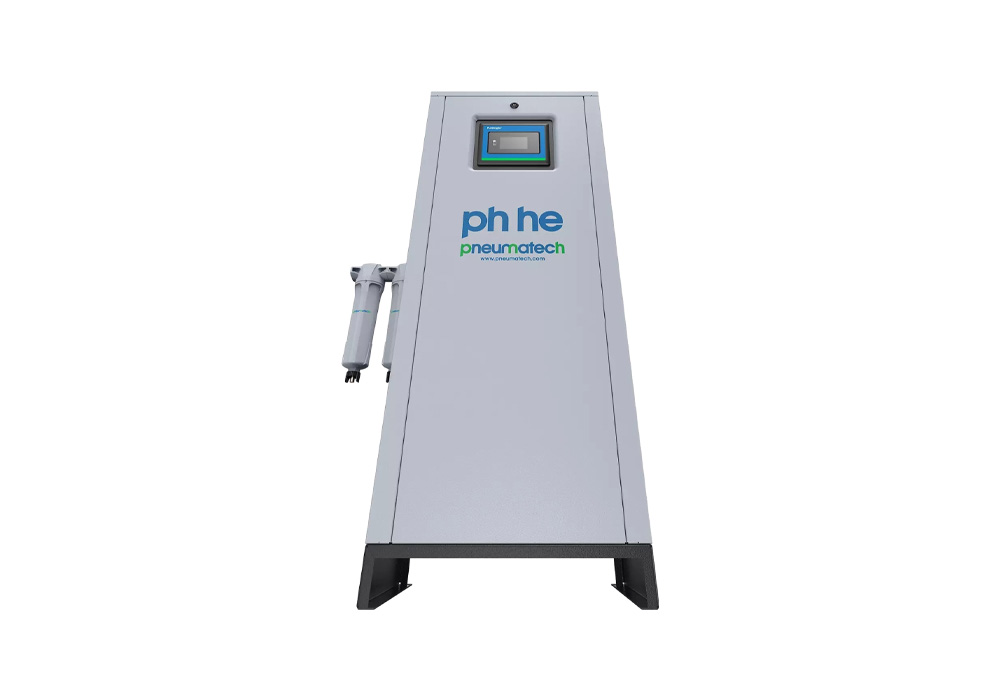
Introduction
Key Benefits
Ultra-Low -70°C Dew Point
Optimized Purge Nozzle
Molecular Sieve Desiccant –
Energy-Efficient Regeneration
Low Pressure Drop
Spring-Loaded Desiccant
Why Choose pH 55–420 He Adsorption Dryers?
Technical Specifications
Model |
Version PDP -70° C |
|---|---|
Nominal volume flow at dryer inlet (m3/h) |
|
PH 55 HE |
90 |
PH 75 HE |
126 |
PH 95 HE |
162 |
PH 120 HE |
198 |
PH 140 HE |
234 |
PH 190 HE |
324 |
PH 230 HE |
396 |
PH 275 HE |
468 |
PH 350 HE |
594 |
PH 420 HE |
702 |
How Does the PH 55–420 HE Work?
The PH 55–420 HE uses adsorption and heatless regeneration to continuously produce very dry compressed air.
Step 1 – Moist Compressed Air Entry
Compressed air containing water vapour enters the active drying vessel.
Step 2 – Pre-Filtration
The upstream filter removes contaminants that could affect the desiccant.
Step 3 – Adsorption
The compressed air passes through the molecular sieve, which captures moisture from the air stream.
Step 4 – Ultra-Dry Air Delivery
The treated air exits the active vessel with a pressure dew point down to -70°C.
Step 5 – Desiccant Saturation
The active desiccant gradually accumulates moisture during the drying cycle.
Step 6 – Counter-Current Regeneration
A portion of dry compressed air is directed through the saturated vessel in the opposite direction to remove the accumulated moisture.
Step 7 – Vessel Switching
The drying and regeneration vessels alternate automatically.
Step 8 – Continuous Dry-Air Production
One vessel dries the compressed air while the other regenerates, allowing uninterrupted operation.
The counter-current regeneration arrangement and optimized purge nozzle are designed to improve regeneration efficiency and minimize purge-air losses.
Why Choose PH 55–420 HE?
-70°C Pressure Dew Point
The range is specifically designed to achieve a pressure dew point of -70°C / -94°F, making it suitable for applications where exceptionally dry compressed air is required.
Molecular Sieve Desiccant
High-efficiency molecular sieve desiccant is selected for applications requiring the deepest level of moisture removal in this range.
Counter-Current Regeneration
Regeneration takes place against the direction of the drying airflow, supporting efficient moisture removal and reliable dry-air production.
Optimized Purge Air Consumption
The unique valve and exhaust design helps maximize purge-air expansion during regeneration, reducing purge losses.
Low Pressure Drop
The optimized valve and exhaust arrangement is designed to minimize pressure drop during the drying cycle, helping reduce the energy penalty associated with air treatment.
Spring-Loaded Desiccant
The desiccant is spring-loaded inside the dryer, reducing movement and the risk of crushing during operation.
Low Noise During Purging
The dryer design helps reduce noise levels during purge and blow-off cycles, making it more suitable for industrial installations where acoustic performance matters.
Easy Desiccant Servicing
Desiccant bags provide convenient access from the top, simplifying maintenance and replacement.
Advanced Monitoring
The optional PureLogic controller provides enhanced control and monitoring capabilities, with communication options including Modbus, Profibus and Ethernet/IP.
Flexible Installation
The range is designed for transportability and mounting, with a wall-mounting kit available for PH 55–190 HE models.
Features & Configuration Options
Drying Technology
- Heatless adsorption
- Dual-vessel operation
- -70°C pressure dew point
- Molecular sieve desiccant
- Counter-current regeneration
- Optimized purge-air management
Energy Management
- Compressor synchronization
- Purge nozzle optimization
- Low pressure drop
- Reduced purge loss
- Optimized regeneration cycle
Mechanical Construction
- Extruded aluminum profile
- Spring-loaded desiccant
- Robust valve arrangement
- Low-noise purge and blow-off
- Transportable design
Filtration
- Standard pre-filter
- Standard after-filter
- Clean compressed-air delivery
Control & Monitoring
- Integrated display
- Optional PureLogic controller
- Optional PDP control
- Modbus communication
- Profibus communication
- Ethernet/IP communication
Installation Options
- Standard floor/industrial installation
- Optional wall-mounting kit for PH 55–190 HE
- Optional IP65 protection
These features and options are based on the current product information and supporting manufacturer documentation.
Industrial Applications

Pharmaceutical Manufacturing

Electronics Manufacturing

Instrumentation & Control Air

Precision Manufacturing

Food & Beverage Manufacturing
Frequently Asked Questions
What is the PH 55–420 HE?
What pressure dew point does the PH 55–420 HE achieve?
What is the flow range?
What models are available?
How should the correct PH model be selected?
Can Atcorp help select and supply the PH 55–420 HE?
Related products
Oil-Injected, Rotary Screw Compressor
CPC Series 40-60 HP
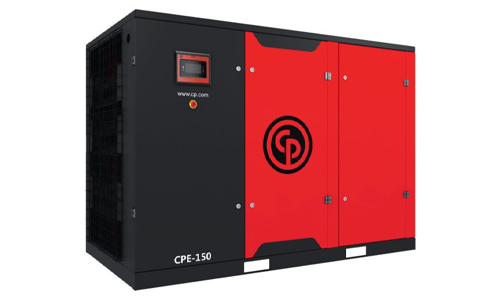
Oil-Injected, Rotary Screw Compressor
CPE Series 150 HP
Oil-Injected, Rotary Screw Compressor
CPF Series 180-220 HP
Oil-Injected, Rotary Screw Compressor
CPF Series 270-340 HP
Oil-Injected, Rotary Screw Compressor