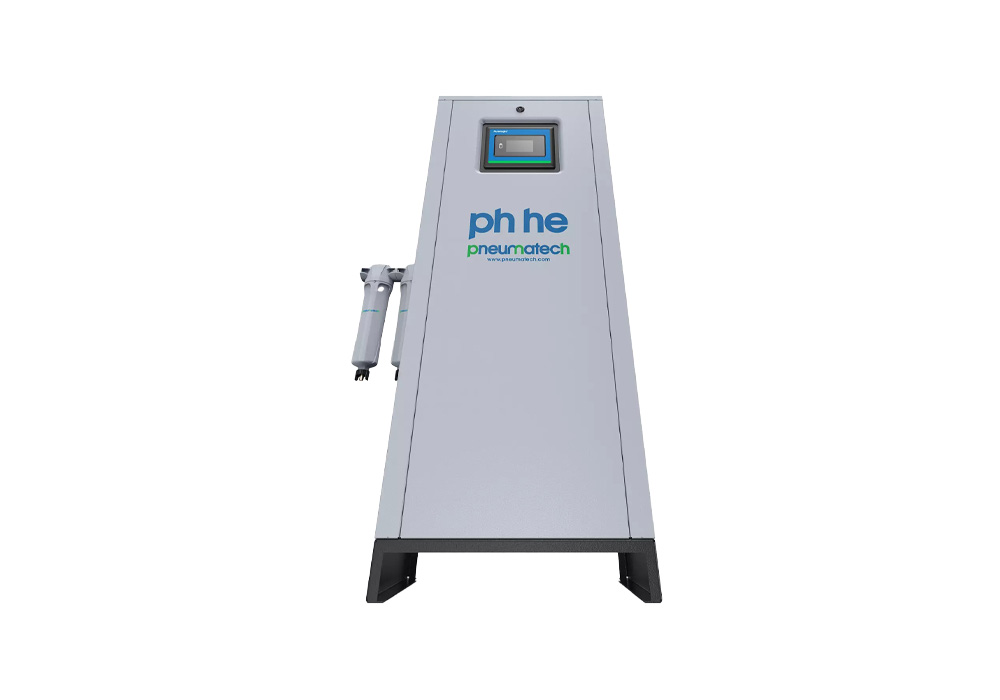
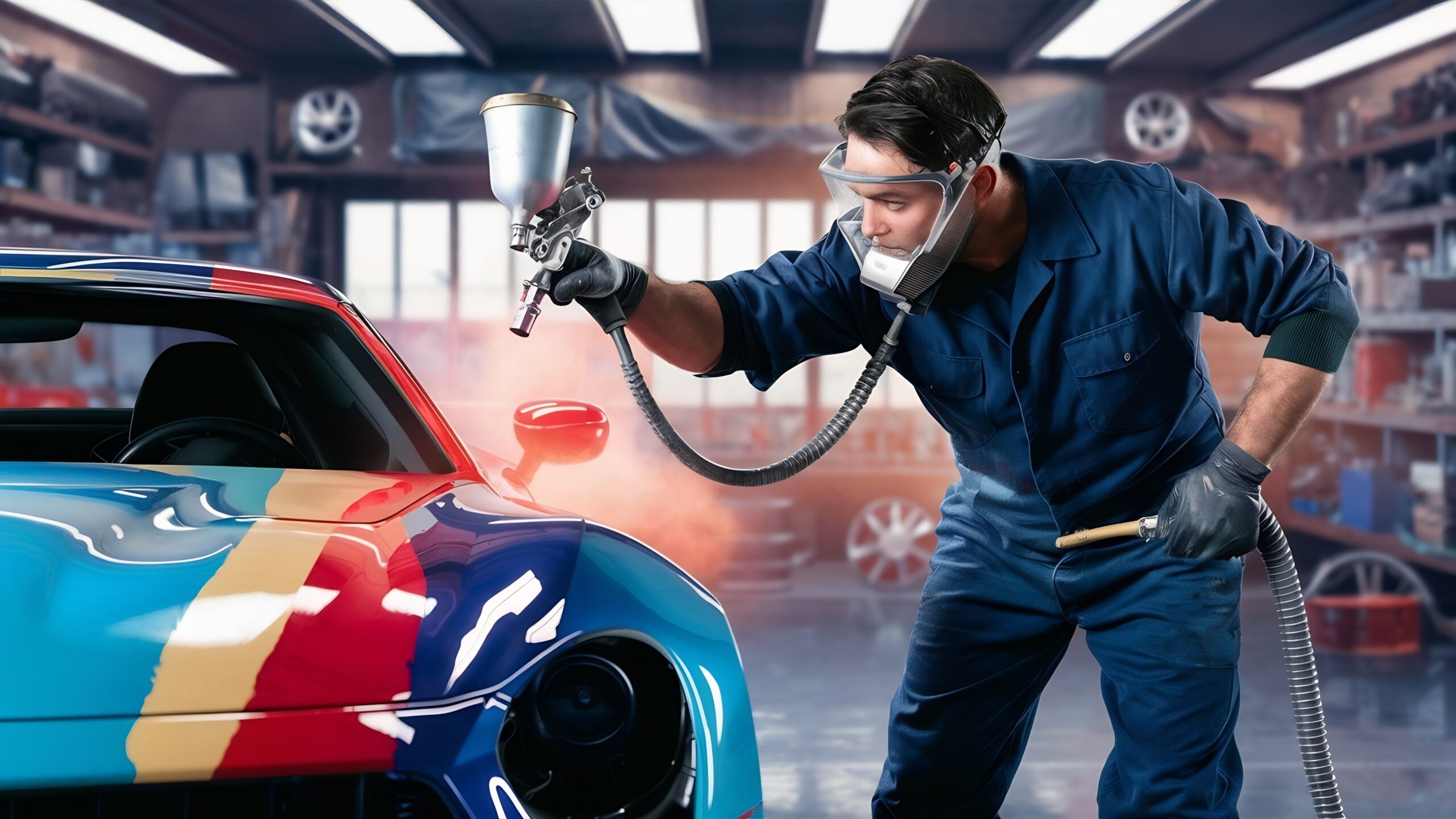
Many industrial processes require compressed air that is considerably drier than conventional refrigeration dryers can provide. Heatless adsorption dryers remove water vapour by passing compressed air through a moisture-adsorbing desiccant, making them suitable for applications where condensation, freezing or moisture-related equipment problems must be minimized.
The PH 90–690 HE range takes this technology further with structured Solides desiccant. Its uniform structure promotes efficient and even airflow, helping reduce pressure drop, stabilize the pressure dew point and extend desiccant service life.
Model |
Version PDP -40°C |
|---|---|
Nominal volume flow at dryer inlet (m3/h) |
|
PH 90 HE |
144 |
PH 110 HE |
198 |
PH 135 HE |
234 |
PH 180 HE |
306 |
PH 220 HE |
378 |
PH 265 HE |
450 |
PH 355 HE |
612 |
PH 400 HE |
684 |
PH 535 HE |
900 |
PH 690 HE |
1206 |
A heatless adsorption dryer uses a desiccant to capture moisture from compressed air and alternates between drying and regeneration cycles.
Step 1 – Moist Compressed Air Entry
Moist compressed air enters the active adsorption vessel.
Step 2 – Filtration
Upstream filtration helps protect the desiccant from oil, water and particulate contamination.
Step 3 – Adsorption
Compressed air flows through the structured desiccant, which captures water vapour.
Step 4 – Dry Air Delivery
The treated air exits the active vessel with a low pressure dew point.
Step 5 – Desiccant Saturation
The active desiccant gradually accumulates moisture.
Step 6 – Regeneration
A portion of dry compressed air is used to regenerate the saturated desiccant.
Step 7 – Vessel Switching
The drying and regeneration vessels alternate automatically.
Step 8 – Continuous Operation
One vessel continues drying while the other is regenerated, providing uninterrupted dry compressed air.
The structured Solides desiccant is designed to distribute airflow evenly, improving contact with the drying material and reducing pressure drop.
Structured Solides Desiccant
Unlike conventional loose desiccant beads, the structured desiccant has a compact, uniform form that promotes even airflow and efficient regeneration.
40% Longer Desiccant Lifetime
The manufacturer specifies a 40% longer desiccant lifetime, helping extend service intervals and reduce maintenance frequency.
Lower Pressure Drop
Even airflow through the structured desiccant reduces flow resistance, helping lower the energy associated with compressed-air pressure losses.
No Desiccant Dust
The solid structured design avoids the dust formation associated with traditional loose desiccant, helping reduce contamination and dryer-failure risks.
Stable Low Dew Point
The PH 90–690 HE provides -20°C or -40°C pressure dew point options for applications requiring significantly dry compressed air.
Robust Pneumatic Valves
Pneumatic valves are designed to provide dependable operation in demanding industrial environments.
Optimized Purge Nozzle
Purge-nozzle optimization helps control regeneration airflow and supports efficient heatless adsorption operation.
PureLogic Touch Control
The PureLogic Touch controller provides real-time monitoring and control, while connectivity options can support integration with DCS, SCADA and PLC systems.
Flexible Installation
The dryers can be installed vertically or horizontally, with a wall-mounting kit available for selected Simplex models.

Standard Features
Model / Configuration Options
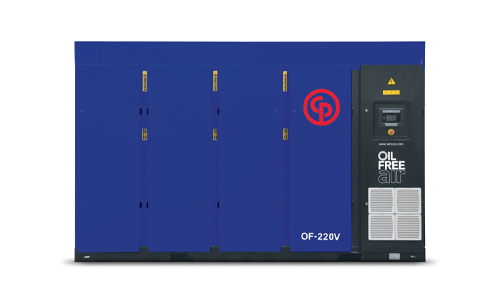
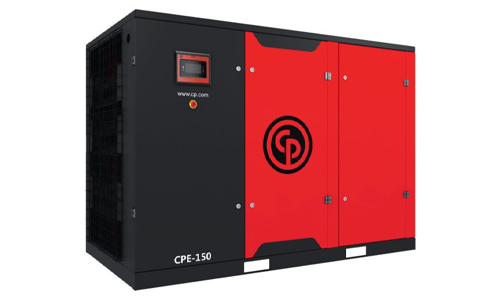
Oil-Injected, Rotary Screw Compressor