Model |
Nominal flow rate (m3/h) |
|
|---|---|---|
16 bar |
20 bar |
|
AC 15 |
22 |
26 |
AC 20 |
36 |
52 |
AC 30 |
54 |
78 |
AC 40 |
72 |
99 |
AC 50 |
90 |
125 |
AC 65 |
108 |
157 |
AC 85 |
144 |
209 |
AC 100 |
180 |
261 |
A refrigeration dryer cools compressed air until moisture condenses and can be separated from the air stream.
Step 1 – Wet Compressed Air Entry
Warm, moisture-laden compressed air enters the dryer.
Step 2 – Air-to-Air Cooling
Incoming compressed air is pre-cooled through the air-to-air heat exchanger.
Step 3 – Refrigeration Cooling
The air then passes through the air-to-refrigerant heat exchanger, where its temperature is reduced further.
Step 4 – Moisture Condensation
As the air cools, water vapour condenses into liquid moisture.
Step 5 – Moisture Removal
The condensate is removed through the zero-loss drain.
Step 6 – Air Reheating
The dried compressed air is reheated through the air-to-air heat exchanger.
Step 7 – Dry Air Delivery
The outgoing air reaches a stable pressure dew point of approximately 3°C.
Step 8 – Energy-Saving Cycling
When cooling demand decreases, the refrigeration system cycles down or stops, reducing unnecessary energy consumption.
Energy-Efficient Cycling
The dryer adapts refrigeration operation to actual cooling demand instead of continuously running at full capacity.
Up to 50% Energy Savings
The energy-saving algorithm can significantly reduce power consumption during periods of reduced cooling demand.
Stable 3°C Pressure Dew Point
The range delivers a pressure dew point as low as 3°C, corresponding to ISO 8573-1:2010 Class 4 moisture performance.
Zero-Loss Condensate Drain
Condensed water is automatically discharged without unnecessarily releasing compressed air.
Low Pressure Drop
Efficient heat exchangers and optimized air passages help minimize pressure losses through the dryer.
Reliable High-Temperature Operation
The dryer accepts compressed-air inlet temperatures up to 60°C, supporting demanding industrial environments.
Automatic Restart
The system automatically restarts after a power failure, reducing the need for manual intervention.
Easy Maintenance
Top connections, long service intervals and accessible components simplify routine maintenance and installation.

Standard Features
Model / Configuration Options
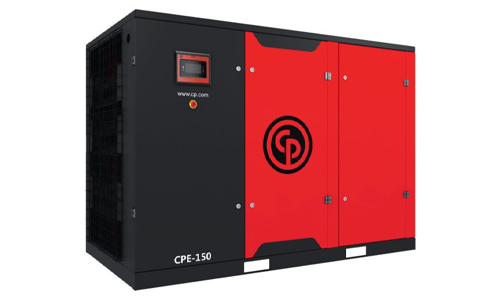
Oil-Injected, Rotary Screw Compressor