
Closed-Loop Cooling Towers
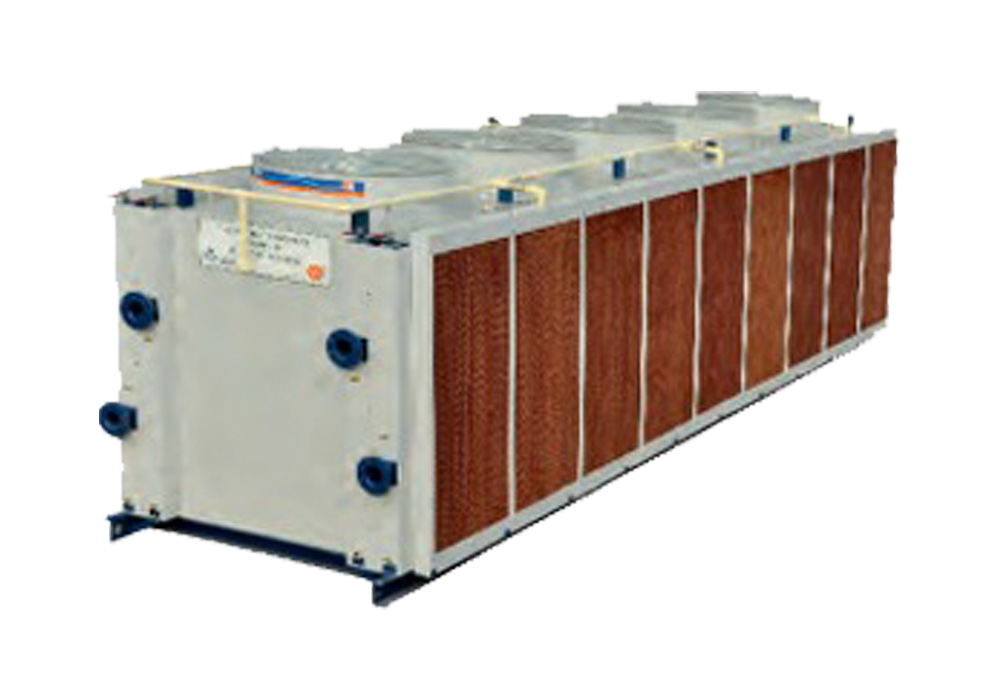
Introduction
Key Benefits
Adiabatic Pre-Cooling
Hot-Weather Performance
Low Maintenance
Reduced Water Consumption
Copper Coil Heat Exchanger
Low-Noise Option
Why Choose Closed-loop Cooling Towers?
Technical Specifications
| Specification | Details |
| Cooling Principle | Closed-Loop Dry Cooling + Adiabatic Pre-Cooling |
| Process Circuit | Closed Loop |
| Primary Cooling Mode | Dry Cooling |
| Additional Cooling | Adiabatic Air Pre-Cooling |
| Heat Exchanger | Extended-Fin Copper Tube Coil |
| Coil Construction | Level-Wound Copper Tubing |
| Tube Design | Hairpin Bends |
| Headers | Heavy-Wall Steel |
| Airflow | Fan-Driven |
| Fan Type | Low-Noise Axial Flow |
| Adiabatic System | Pre-Cooling Pads |
| Water Consumption | Demand-Based |
| Enclosure | Fibreglass / GI |
| Model Range | ADCT 80 – ADCT 320 |
| Low-Noise Version | Available |
| Installation | Industrial / Outdoor |
How Does a Closed-Loop Cooling Tower Work?
A closed-loop cooling tower normally operates as a dry cooler and activates adiabatic pre-cooling when ambient conditions require additional heat-rejection performance.
Step 1 – Hot Process Fluid Entry
Hot process fluid enters the closed copper-tube heat exchanger.
Step 2 – Ambient Air Intake
Axial fans draw atmospheric air toward the finned heat-transfer coils.
Step 3 – Dry Cooling
Under suitable ambient conditions, air passes directly across the coils and removes heat from the process fluid.
Step 4 – Adiabatic Activation
When ambient temperatures increase, the adiabatic pre-cooling system is activated.
Step 5 – Air Pre-Cooling
Water evaporates from the pre-cooling pads, reducing the temperature of the incoming air.
Step 6 – Enhanced Heat Rejection
The cooler air passes over the copper coils, increasing the temperature difference available for heat transfer.
Step 7 – Process Fluid Cooling
Heat is transferred from the closed-loop process fluid into the air.
Step 8 – Continuous Operation
The system can continue operating in dry or adiabatically assisted mode according to cooling demand.
Why Choose Closed-Loop Cooling Towers?
Closed-Loop Process Cooling
The process fluid remains inside the copper coil, helping protect it from atmospheric contamination.
Adiabatic Cooling Boost
Pre-cooling pads lower incoming-air temperature during hot weather, improving heat rejection when dry cooling alone becomes less effective.
Reduced Water Consumption
Unlike fully evaporative cooling towers, the system does not continuously evaporate water during normal dry operation.
Efficient Copper Coil Heat Transfer
Level-wound copper tubing with extended fins provides a large heat-transfer surface within a compact arrangement.
Lower Contamination Risk
The process fluid is isolated from the adiabatic water and atmospheric environment.
Reduced Wet-System Maintenance
Because the tower can operate as a dry cooler for much of its operating time, dependence on continuously wet components is reduced.
Hot-Weather Reliability
Adiabatic pre-cooling provides additional heat-rejection capability when ambient temperatures are high.
Low-Noise Configuration
A low-noise model is available for installations where operating sound levels are a consideration.
Construction & Component Features
Heat Exchanger
- Imported copper tube coils
- Extended-fin construction
- Level-wound coil design
- Hairpin bends
- Heavy-wall steel headers
- Reduced number of joints
- Closed process-fluid circuit
Adiabatic System
- Pre-cooling pads installed ahead of the coil
- Evaporative air pre-cooling
- Demand-based water usage
- Enhanced hot-weather performance
Airflow System
- Axial flow fans
- Electric motor-driven airflow
- Low-noise configuration available
- Airflow directed across finned copper coils
Tower Construction
- Fibreglass/GI enclosure
- Corrosion-resistant construction
- Industrial outdoor configuration
- Closed-loop process cooling arrangement
Industrial Applications

Data Centers

Industrial Process Cooling

Pharmaceutical Manufacturing

Food & Beverage Processing

Power & Utility Systems
Frequently Asked Questions
What is a closed-loop cooling tower?
How does a closed-loop cooling tower work?
Does a closed-loop cooling tower continuously consume water?
Is a low-noise version available?
How should a closed-loop cooling tower be selected?
Can Atcorp help select and supply a closed-loop cooling tower?
Related products
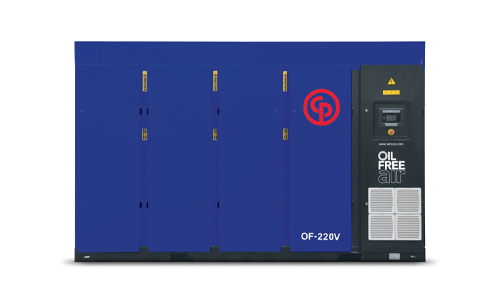
Oil-Injected, Rotary Screw Compressor
CPC Series 40-60 HP
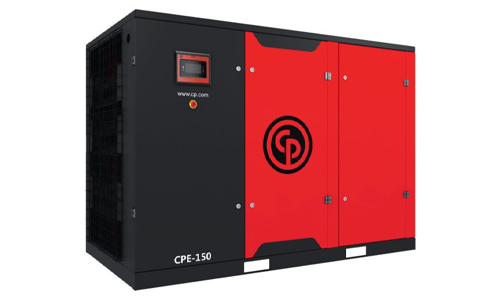
Oil-Injected, Rotary Screw Compressor
CPE Series 150 HP
Oil-Injected, Rotary Screw Compressor
CPF Series 180-220 HP
Oil-Injected, Rotary Screw Compressor
CPF Series 270-340 HP
Oil-Injected, Rotary Screw Compressor